
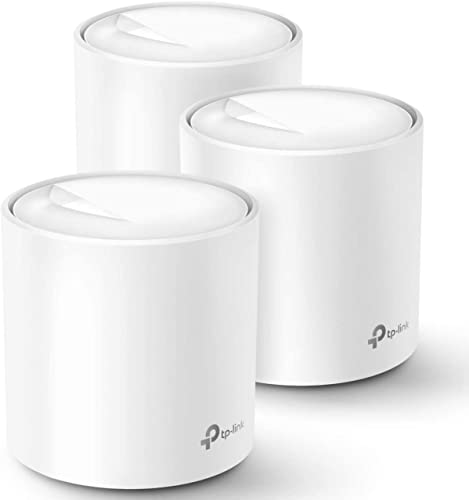
The struggle is real. Thick concrete walls can turn your home’s Wi-Fi into a frustrating game of hide-and-seek. But don’t despair! We’ve rounded up seven of the best mesh Wi-Fi systems specifically designed to conquer even the toughest concrete barriers, delivering strong, reliable signals throughout your home. Let’s dive in!
TP-Link Deco WiFi 6 Mesh System (Deco X20)
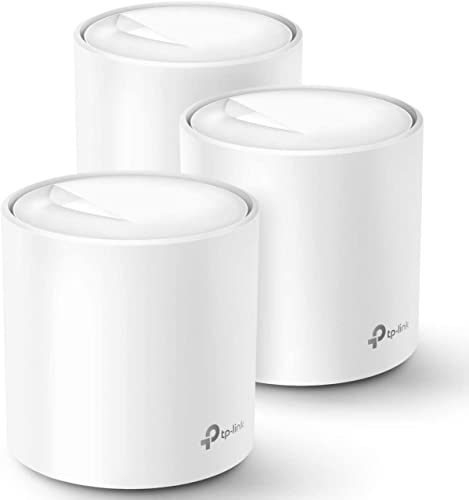
This affordable Wi-Fi 6 system is a great starting point for tackling weak signals caused by concrete walls. The Deco X20 offers excellent coverage and the ability to handle a large number of connected devices, making it perfect for busy households. Its user-friendly app makes setup a breeze, even for tech novices.
- Wi-Fi 6 technology
- Covers up to 5800 square feet
- Supports up to 150 devices
- Easy setup via app
- Parental controls
- TP-Link HomeShield security
Pros:
– Affordable price point
– Excellent coverage for its price
– Easy setup and management
Cons:
– Coverage might be insufficient for extremely large homes or those with exceptionally thick concrete walls.
– Some users report occasional connectivity hiccups.
User Impressions: Customers generally praise the Deco X20 for its ease of use and surprisingly good performance, considering its cost. While some mention limitations in extremely challenging environments, most find it a significant upgrade over traditional routers.
TP-Link Deco X55 AX3000 WiFi 6 Mesh System

Stepping up from the X20, the Deco X55 boasts faster speeds thanks to its AX3000 Wi-Fi 6 technology. It offers even better penetration through those pesky concrete walls and features additional Gigabit Ethernet ports for wired connections. Its AI-driven mesh technology optimizes performance based on your home’s layout.
- Wi-Fi 6 AX3000
- Covers up to 6500 square feet
- Supports up to 150 devices
- Multiple Gigabit Ethernet ports
- AI-driven mesh technology
- TP-Link HomeShield security
Pros:
– Superior speed and performance compared to the X20
– More Ethernet ports for wired devices
– AI optimization for better network efficiency
Cons:
– Higher price than the Deco X20
– Some advanced features require a subscription.
User Impressions: Users consistently highlight the X55’s speed and improved range compared to other mesh systems. The additional Ethernet ports are a welcome bonus for those who need wired connections.
TP-Link Deco BE63 Tri-Band WiFi 7 Whole Home Mesh System

For those who want the absolute best performance and future-proofing, the Deco BE63 with its cutting-edge Wi-Fi 7 technology is a powerful choice. This tri-band system offers incredible speeds and vast coverage, easily piercing concrete walls with its superior signal strength.
- Wi-Fi 7 technology
- Covers up to 7600 square feet
- Supports over 200 devices
- Multiple 2.5G WAN/LAN ports
- AI-driven seamless roaming
- TP-Link HomeShield security
Pros:
– Cutting-edge Wi-Fi 7 technology for blazing-fast speeds
– Extremely wide coverage area
– High device capacity
Cons:
– High price point
– Wi-Fi 7 compatibility is still relatively limited.
User Impressions: Early adopters rave about the Deco BE63’s exceptional speed and broad coverage. Its future-proof technology is a major draw for those investing in a long-term solution.
TP-Link Deco S4 Mesh AC1900 WiFi System
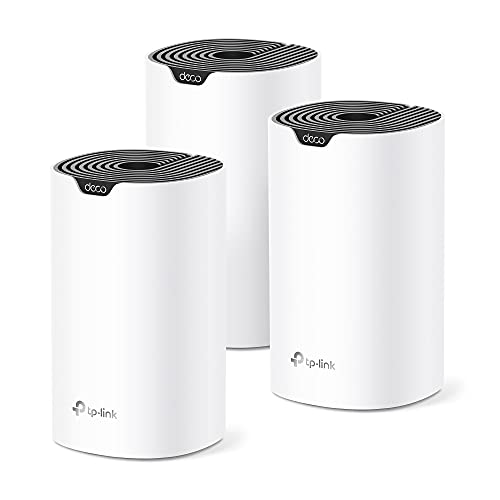
A solid mid-range option, the Deco S4 provides reliable performance and strong coverage, effectively penetrating concrete walls while remaining budget-friendly. It’s a great choice for those who need a balance of performance and affordability.
- AC1900 speeds
- Covers up to 5500 square feet
- Supports up to 100 devices
- Robust parental controls
- Easy setup via app
- Gigabit Ethernet ports
Pros:
– Good balance of price and performance
– Easy setup
– Effective parental controls
Cons:
– Slower speeds compared to Wi-Fi 6 and Wi-Fi 7 systems
– Coverage might be limited in very large homes with thick concrete walls.
User Impressions: Customers appreciate the Deco S4 for its reliable performance and straightforward setup. It’s a popular choice for families seeking a balance between functionality and budget.
Tenda AX3000 WiFi 6 Mesh System Nova MX12

The Tenda Nova MX12 provides a compelling alternative, offering strong Wi-Fi 6 performance and broad coverage at a competitive price. It effectively mitigates the challenges presented by concrete walls while offering robust features like seamless roaming.
- Wi-Fi 6 AX3000
- Covers up to 7000 square feet
- Supports over 160 devices
- Seamless roaming
- Easy setup via app or web GUI
- Parental controls
Pros:
– Excellent coverage and speed for its price
– Easy setup and management
– Good parental control features
Cons:
– Less established brand than TP-Link
– App updates are vital for optimal performance.
User Impressions: Users find the MX12 to be a good value for the performance and coverage it delivers. While the brand is less widely known, the product itself receives positive reviews.
TP-Link Deco BE95 Quad-Band WiFi 7 Whole Home Mesh System

The Deco BE95 is a top-tier choice featuring quad-band Wi-Fi 7, offering unparalleled speed and coverage. Its advanced technology ensures strong signals even through thick concrete walls, making it ideal for larger homes or those with challenging building materials.
- Quad-band Wi-Fi 7 technology
- Extremely high speeds (up to BE33000)
- Pro-grade 10G WAN/LAN ports
- AI-driven seamless roaming
- TP-Link HomeShield security
Pros:
– Unmatched speed and performance
– Future-proof technology
– Excellent coverage for large homes
Cons:
– Very high price point
– Very limited Wi-Fi 7 device compatibility currently
User Impressions: Early reviews highlight the astounding speed and comprehensive feature set, making it a premium option for tech enthusiasts with high bandwidth demands.
TP-Link Deco XE75 Pro AXE5400 Tri-Band WiFi 6E Mesh System

The Deco XE75 Pro utilizes the less congested 6GHz band (Wi-Fi 6E) for superior performance. This reduces interference and ensures a faster, more stable connection, even when dealing with concrete walls. It’s a strong contender for homes needing robust speeds.
- WiFi 6E Tri-Band
- Covers up to 5,500 sq ft
- Up to 5400 Mbps total speed
- 2.5Gbps port for multi-gigabit internet plans
- AI-driven mesh technology
- TP-Link HomeShield
Pros:
– Utilizes the less congested 6GHz band
– Excellent speeds
– AI optimization for smart network management
Cons:
– Higher price
– Requires 6GHz-compatible devices to fully utilize the 6GHz band
User Impressions: Users appreciate the speed and reliability of the XE75 Pro, particularly its ability to handle multiple devices and high-bandwidth activities.
FAQ
Q: What makes mesh Wi-Fi better than a traditional router for concrete walls?
A: Mesh Wi-Fi systems use multiple nodes to create a wider and more reliable network. These nodes communicate with each other, providing better signal penetration through obstacles like concrete walls, eliminating dead zones.
Q: How many mesh points do I need for my home?
A: The number of points depends on the size of your home, the thickness of your walls, and the number of devices you need to connect. Start with a 3-pack for most homes, and add more as needed.
Q: Do all mesh Wi-Fi systems work equally well with concrete walls?
A: No. While many mesh systems offer improved performance compared to traditional routers, some are better equipped to handle concrete walls than others. Look for systems with features like Wi-Fi 6 or Wi-Fi 7 and higher transmit power.
Q: Will mesh Wi-Fi eliminate all dead zones?
A: While mesh Wi-Fi dramatically improves coverage and reduces dead zones, it might not eliminate them completely in homes with exceptionally thick concrete walls or complex layouts.
Q: Can I mix and match mesh points from different brands?
A: Generally, it’s not recommended. Mixing brands can lead to compatibility issues and reduce overall performance. Stick with a single brand for optimal results.
Q: What is backhaul, and why is it important for concrete walls?
A: Backhaul refers to how the mesh points communicate with each other. Wired backhaul (Ethernet cables) offers the best performance and is especially helpful in homes with thick walls, while wireless backhaul is convenient but can be affected by interference.
Q: What are some other factors to consider when choosing a mesh Wi-Fi system for concrete walls?
A: Consider the size of your home, the number of devices you’ll connect, your internet speed, your budget, and the features you need (parental controls, guest networks, etc.).
{“@context”: “https://schema.org”, “@type”: “FAQPage”, “mainEntity”: [{“@type”: “Question”, “name”: “What makes mesh Wi-Fi better than a traditional router for concrete walls?”, “acceptedAnswer”: {“@type”: “Answer”, “text”: “Mesh Wi-Fi systems use multiple nodes to create a wider and more reliable network. These nodes communicate with each other, providing better signal penetration through obstacles like concrete walls, eliminating dead zones.”}}, {“@type”: “Question”, “name”: “How many mesh points do I need for my home?”, “acceptedAnswer”: {“@type”: “Answer”, “text”: “The number of points depends on the size of your home, the thickness of your walls, and the number of devices you need to connect. Start with a 3-pack for most homes, and add more as needed.”}}, {“@type”: “Question”, “name”: “Do all mesh Wi-Fi systems work equally well with concrete walls?”, “acceptedAnswer”: {“@type”: “Answer”, “text”: “No. While many mesh systems offer improved performance compared to traditional routers, some are better equipped to handle concrete walls than others. Look for systems with features like Wi-Fi 6 or Wi-Fi 7 and higher transmit power.”}}, {“@type”: “Question”, “name”: “Will mesh Wi-Fi eliminate all dead zones?”, “acceptedAnswer”: {“@type”: “Answer”, “text”: “While mesh Wi-Fi dramatically improves coverage and reduces dead zones, it might not eliminate them completely in homes with exceptionally thick concrete walls or complex layouts.”}}, {“@type”: “Question”, “name”: “Can I mix and match mesh points from different brands?”, “acceptedAnswer”: {“@type”: “Answer”, “text”: “Generally, it’s not recommended. Mixing brands can lead to compatibility issues and reduce overall performance. Stick with a single brand for optimal results.”}}, {“@type”: “Question”, “name”: “What is backhaul, and why is it important for concrete walls?”, “acceptedAnswer”: {“@type”: “Answer”, “text”: “Backhaul refers to how the mesh points communicate with each other. Wired backhaul (Ethernet cables) offers the best performance and is especially helpful in homes with thick walls, while wireless backhaul is convenient but can be affected by interference.”}}, {“@type”: “Question”, “name”: “What are some other factors to consider when choosing a mesh Wi-Fi system for concrete walls?”, “acceptedAnswer”: {“@type”: “Answer”, “text”: “Consider the size of your home, the number of devices you’ll connect, your internet speed, your budget, and the features you need (parental controls, guest networks, etc.).”}}]}


Leave a Reply
You must be logged in to post a comment.