
Ever found yourself stuck in a Wi-Fi dead zone, just begging for a stronger signal? You know the drill – trying to stream your favorite show, only for it to buffer endlessly, or getting dropped from an important video call because your Wi-Fi just can’t reach. It’s enough to make anyone pull their hair out! If you’re looking to banish those frustrating Wi-Fi gaps, a good range extender is your best friend.
While you might be specifically searching for an ASUS AC750 range extender review, the world of Wi-Fi extenders has grown, offering even more powerful and feature-rich options. In this article, we’ll dive into some of the best Wi-Fi range extenders on the market, including top-tier ASUS options and popular AC750 models, to help you make an informed decision. We’ll explore what makes each one tick, weigh their pros and cons, and give you a clear picture of what users really think. Let’s get your entire home connected!
Our Top Picks for Wi-Fi Range Extenders
Ready to say goodbye to Wi-Fi woes? Here are our top 5 picks, ranging from reliable AC750 options to cutting-edge WiFi 6 and even WiFi 7 boosters.
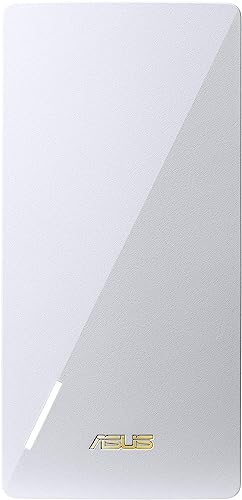
ASUS RP-AX58 AX3000 Dual Band WiFi 6 (802.11ax) Range Extender

If you’re looking to future-proof your home network and enjoy blazing-fast speeds, the ASUS RP-AX58 is a fantastic choice. This isn’t just a simple Wi-Fi booster; it’s a high-performance WiFi 6 extender designed to work seamlessly with modern routers, especially those from ASUS. It brings advanced features like commercial-grade security and flexible mesh networking to extend your wireless coverage, making dead spots a thing of the past.
- High Efficiency WiFi 6: Enjoy fast speeds up to 3000 Mbps with WiFi 6 (802.11ax).
- Commercial-grade Network Security: Lifetime free ASUS AiProtection Pro, powered by Trend Micro, with WPA3 for robust home protection.
- More Privacy, Anywhere: Instant Guard gives you one-click secure internet access via your AiMesh-compatible router from anywhere in the world.
- Parental Controls for All Ages: Customize settings for different age groups, giving your kids the internet access they need safely.
- ASUS AiMesh Support: Create a flexible, seamless whole-home mesh network with AiMesh-compatible routers.
Pros:
– Blazing-fast WiFi 6 speeds for multiple devices.
– Robust, free lifetime cybersecurity features.
– Excellent parental controls for family-friendly internet.
– Seamless mesh networking with ASUS AiMesh.
– Easy setup with the ASUS Router app.
Cons:
– Higher price point than basic extenders.
– Best performance achieved when paired with an ASUS AiMesh router.
User Impressions: Users rave about the significant improvement in signal strength and speed, especially when extending an existing ASUS AiMesh system. They often highlight the ease of setup and the peace of mind provided by the advanced security features, making it a favorite for those with a modern home network.
TP-Link AC750 Wi-Fi Range Extender with Two External Antennas (RE200)

For those who are specifically in the market for an AC750 range extender, the TP-Link RE200 is a highly popular and budget-friendly option. It’s a straightforward device designed to take your existing Wi-Fi signal and extend it, effectively eliminating those frustrating dead zones without breaking the bank. Its dual-band capability means it can operate on both 2.4GHz and 5GHz frequencies, offering a good balance of range and speed for everyday tasks.
- Brings Wi-Fi dead zones to life with strong Wi-Fi expansion at a combined speed of up to 750Mbps.
- Operates over both the 2.4GHz band (300Mbps) and 5GHz band (433Mbps) for a more stable wireless experience.
- Intelligent signal light helps to find the best location for optimal Wi-Fi coverage by showing the signal strength.
- Works with any Wi-Fi router or wireless access point.
Pros:
– Affordable and cost-effective solution for basic Wi-Fi extension.
– Dual-band technology for improved stability.
– Intelligent signal indicator simplifies optimal placement.
– Universal compatibility with any standard Wi-Fi router.
– Compact, wall-plug design saves space.
Cons:
– AC750 speeds might not be sufficient for very demanding applications or large households.
– No advanced security or mesh features.
User Impressions: Customers frequently praise the TP-Link AC750 for its simplicity and effectiveness. Many are pleasantly surprised by how easily it eliminates Wi-Fi dead spots in small to medium-sized homes. The intelligent signal light is often cited as a game-changer for hassle-free installation.
TP-Link AC1900 WiFi Range Extender RE550 | Dual-Band Gigabit Ethernet Port

Stepping up from the basic AC750 models, the TP-Link AC1900 RE550 offers a significant boost in speed and coverage. This extender is perfect if you need more muscle to handle multiple devices, 4K streaming, or online gaming across a larger home. With its three adjustable external antennas and a Gigabit Ethernet port, it’s a versatile solution for robust wireless coverage and even provides a wired connection where you need it most.
- Dual-Band WiFi Extender with 1.9 Gbps Total Bandwidth: Extends your home network with full speeds of 1300 Mbps (5 GHz) and 600 Mbps (2.4 GHz).
- Maximized Coverage up to 2100 Sq. Ft: Three adjustable external antennas provide optimal Wi-Fi coverage and reliable connections, eliminating dead zones for up to 32 devices.
- Our Cybersecurity Commitment: TP-Link is a signatory of the U.S. Cybersecurity and Infrastructure Security Agency’s (CISA) Secure-by-Design pledge.
- EasyMesh-Compatible: Easily expand your network for seamless, whole-home mesh connectivity by connecting the RE550 to any EasyMesh-compatible router.
- Wi-Fi Extender with Gigabit Ethernet Port: Experience wired speed and reliability anywhere in your home.
- Smart Adaptive Roaming: Seamlessly move throughout your home with automatic connections to the strongest signal.
- Access Point (AP) Mode: Easily turn any wired connection into a powerful Wi-Fi hotspot.
- Easy Set Up in Minutes: Easily set up and manage your WiFi using the TP-Link Tether app.
- Universal Compatibility: Compatible with almost all WiFi-enabled devices and routers or access points.
Pros:
– Significantly higher speeds and wider coverage than AC750 models.
– Gigabit Ethernet port for wired connections (e.g., smart TVs, gaming consoles).
– EasyMesh compatibility for a seamless mesh network experience.
– Robust design with three adjustable antennas for optimized signal.
– Simple setup and management via the TP-Link Tether app.
Cons:
– Higher cost than entry-level extenders.
– Won’t increase your router’s internet speed, only extends the existing signal.
User Impressions: Users are generally thrilled with the RE550’s performance, noting its ability to eliminate Wi-Fi dead spots even in challenging areas. The Gigabit Ethernet port is a frequent highlight, allowing for stable wired connections. Many appreciate the easy setup process and the smart roaming feature for a truly seamless experience.
NETGEAR EX3110-100NAS AC750 WiFi Range Extender

When it comes to straightforward Wi-Fi extension, the NETGEAR EX3110-100NAS AC750 is another solid contender. Much like its TP-Link AC750 counterpart, this Netgear offering aims to banish Wi-Fi dead zones with minimal fuss. It’s a plug-and-play solution that gets your signal where it needs to go, making it an excellent choice for basic coverage needs or those who prefer the Netgear ecosystem.
- Device Type: Range extender
- Condition: New
- Data Link Protocol: IEEE 802.11 AC (AC750)
Pros:
– Simple and compact design.
– Easy to set up, often just a push of a button.
– Effective at extending Wi-Fi to smaller dead zones.
– Affordable entry-level option.
Cons:
– Basic feature set compared to more advanced extenders.
– AC750 speeds might be limiting for power users.
– May not be ideal for very large homes or heavy network traffic.
User Impressions: Reviewers often point to the Netgear EX3110’s reliable performance for its price point. It’s praised for its straightforward installation and ability to deliver a stable signal to previously unconnected areas. It’s a popular pick for those who just need to fill in a small Wi-Fi gap without complicated features.
ASUS RP-BE58 BE3600 Dual Band WiFi 7 (802.11be) Range Extender

If you’re at the forefront of technology and want the absolute best in Wi-Fi extension, the ASUS RP-BE58 BE3600 is a glimpse into the future. This WiFi 7 range extender is a powerhouse, offering incredible speeds and advanced features like Multi-link Operation (MLO) for unparalleled stability. Designed to seamlessly integrate with ASUS AiMesh systems, it’s the ultimate choice for large homes with numerous devices and a hunger for the fastest, most reliable wireless experience. This is far beyond any ASUS AC750 range extender review could cover!
- WiFi 7 Standard: WiFi 7 (802.11be) dual-band range extender boosts speeds up to 3600 Mbps, with 4096-QAM increasing a single frequency band’s transmission speed by 1.2 times.
- Multi-link Operation (MLO): Link to multiple bands at the same time to ensure stable internet connections and efficient data transfers.
- Works Perfectly with Any WiFi Router: RP-BE58 expands coverage by being compatible with virtually all WiFi routers, modems, and cable routers on the market.
- Extend Seamless AiMesh WiFi Systems: RP-BE58 supports AiMesh, which enables you to enjoy a stable, seamless, and secure wireless connection with compatible devices anywhere in your home.
- Easy Setup with Mobile App: Setup RP-BE58 with ASUS Router app or ASUS Extender app with just a few taps.
Pros:
– Cutting-edge WiFi 7 technology for future-proof performance.
– Incredibly fast speeds up to 3600 Mbps.
– Multi-link Operation ensures ultra-stable connections.
– Seamlessly integrates with existing ASUS AiMesh networks.
– Universal compatibility, works with any router.
– Easy setup via intuitive mobile apps.
Cons:
– Premium price point, an investment in future technology.
– Requires a WiFi 7 compatible router to fully utilize its advanced features.
User Impressions: As a relatively new and high-end product, early adopters are thrilled with its performance. They report unprecedented speeds and stability, especially when paired with a WiFi 7 router. The seamless AiMesh integration is a major plus, creating a truly unified home network that leaves no corner unreached.
Conclusion
Navigating the world of Wi-Fi range extenders can feel a bit overwhelming, but hopefully, this deep dive has shed some light on your options. Whether you were specifically looking for an ASUS AC750 range extender review or simply trying to figure out how to zap those pesky Wi-Fi dead zones, we’ve covered a range of solutions from the reliable and budget-friendly AC750 models to the cutting-edge WiFi 7 powerhouses.
The key takeaway is that the best range extender for you depends on your specific needs, existing router, and budget. For basic Wi-Fi extension and solid value, the TP-Link AC750 or Netgear AC750 are excellent starting points. If you’re looking for a significant performance boost, advanced features like cybersecurity and AiMesh, or you have an ASUS router, then the ASUS RP-AX58 (WiFi 6) or even the future-proof ASUS RP-BE58 (WiFi 7) are worth the investment.
Ultimately, don’t settle for spotty Wi-Fi! By choosing the right range extender, you can transform your home network, ensuring smooth streaming, lag-free gaming, and reliable connectivity for all your devices, no matter where you are in your home. Happy extending!
FAQ Section
Q1: What is a Wi-Fi range extender and how does it work?
A Wi-Fi range extender (also called a Wi-Fi booster or repeater) is a device that picks up your existing Wi-Fi signal from your router, amplifies it, and then rebroadcasts it. This effectively extends the reach of your wireless network to areas that previously had weak or no signal, eliminating Wi-Fi dead zones.
Q2: Do I really need a range extender?
If you experience slow Wi-Fi speeds, dropped connections, or complete dead spots in certain rooms or areas of your home, a range extender can be a cost-effective solution. It’s especially useful in larger homes, multi-story buildings, or homes with many walls that obstruct Wi-Fi signals.
Q3: What’s the difference between AC750, AC1900, AX3000, and BE3600?
These numbers refer to the theoretical maximum combined speed (in Mbps) of the Wi-Fi standard the device supports across its different frequency bands (2.4GHz and 5GHz, or even 6GHz for WiFi 6E/7).
* AC750 is typically dual-band (WiFi 5), offering around 300 Mbps on 2.4GHz and 433 Mbps on 5GHz.
* AC1900 is also WiFi 5 but offers higher speeds, e.g., 600 Mbps on 2.4GHz and 1300 Mbps on 5GHz.
* AX3000 (WiFi 6) indicates a much higher combined theoretical speed, taking advantage of WiFi 6 efficiencies.
* BE3600 (WiFi 7) represents the latest and fastest standard, offering even greater speeds and efficiency, often with Multi-link Operation (MLO).
Higher numbers mean more bandwidth and better performance, especially for multiple devices or demanding tasks like 4K streaming and online gaming.
Q4: Where should I place my Wi-Fi range extender for the best performance?
The ideal spot is roughly halfway between your main Wi-Fi router and the area where you need improved coverage. If it’s too close to the router, it won’t effectively extend the signal. If it’s too far, it might receive a weak signal itself, leading to poor performance. Many extenders (like the TP-Link AC750 and AC1900) have intelligent signal indicator lights to help you find the optimal location.
Q5: Will a range extender slow down my Wi-Fi speed?
Yes, to some extent. Range extenders typically act as a bridge, meaning they receive and re-transmit data using the same wireless band, which can halve the available bandwidth. This effect is less noticeable with dual-band extenders, especially those with dedicated backhaul or mesh systems that use different channels or bands for communication between the router and extender. Newer standards like WiFi 6 and WiFi 7 also have technologies that improve efficiency.
Q6: What is a mesh Wi-Fi system, and how is it different from a range extender?
A mesh Wi-Fi system uses multiple access points (nodes) that work together as a single, unified network, providing seamless coverage throughout your home. Unlike traditional range extenders, which often create a separate network name (SSID), mesh systems allow you to roam freely without manually switching networks. Some extenders, like the ASUS RP-AX58 and TP-Link RE550, support mesh technologies (AiMesh or EasyMesh), allowing them to integrate into a mesh system.
Q7: Are range extenders compatible with any router?
Most Wi-Fi range extenders are designed to be universally compatible with any standard Wi-Fi router or wireless access point. However, to get the absolute best performance and utilize advanced features like seamless roaming or specific management apps, pairing an extender with a router from the same brand (e.g., an ASUS extender with an ASUS AiMesh router) can be beneficial.
Q8: What features should I look for in a good range extender?
Consider:
* Speed (AC750, AX3000, etc.): Match it to your internet plan and usage needs.
* Dual-Band Support: Essential for better performance and less interference.
* Ethernet Port: Useful for connecting wired devices like gaming consoles or smart TVs.
* Easy Setup: Look for devices with app-based setup or WPS (Wi-Fi Protected Setup) buttons.
* Mesh Compatibility: If you want a seamless whole-home network.
* Security Features: WPA3, parental controls, or built-in antivirus (like ASUS AiProtection).
* Antennas: External antennas can often provide better signal direction and strength.


Leave a Reply
You must be logged in to post a comment.